Describe three ways the room needs to work
Begin with activities rather than a shopping list. Write down three situations you want the room to support: arriving home, reading in a chair and spending time with other people, for example. For each one, note where people sit or stand, what they need to see and what currently interrupts the experience.
Turn each observation into a question you can test. Instead of “the room needs more lights,” try “can I read in this chair without looking toward an exposed bulb?” Instead of “add a pendant,” ask whether the dining surface and the people around it are comfortably visible. These are illustrative exercises, not accounts of an Archmora installation.
Keep daylight and after-dark observations separate. A fitting that looks well proportioned in a daytime photograph still needs to earn its place when the room is in use. This brief gives a designer a clearer starting point than a collection of unrelated fixtures.
Give each lighting layer a clear job
Use ambient, task and accent as working descriptions of a purpose. Ambient light helps you read the room as a whole; task light serves an activity or surface; accent light draws attention to something you want to notice. You do not need a different decorative fitting for every label. Ask what each proposed source contributes and whether another source already does that job.
On a simple room sketch, mark the chair, work surface, table and routes people actually use. Beside each proposed light, write the activity it supports. If a lamp has no clear role beyond filling an empty corner, pause before ordering it.
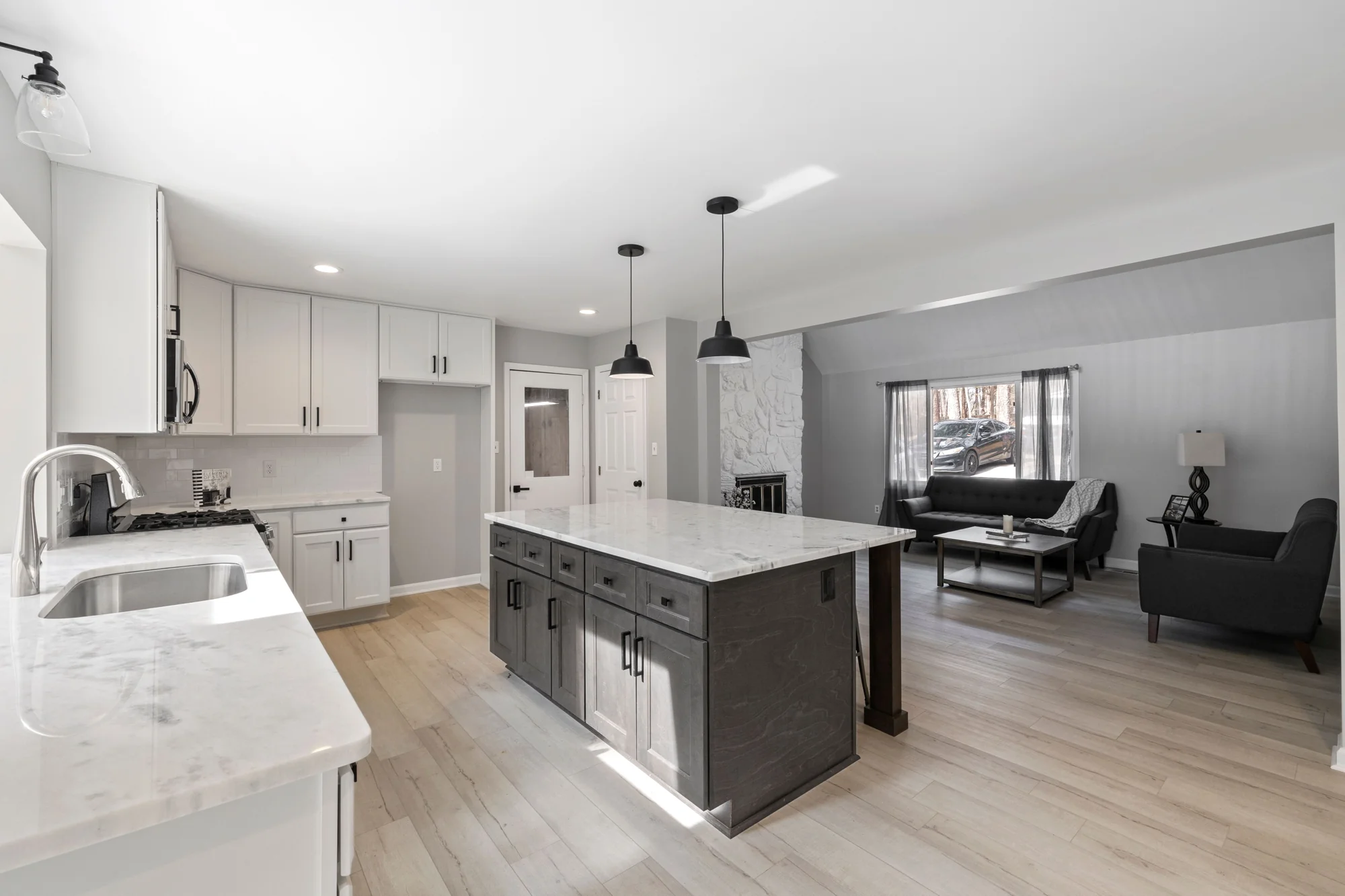
For an open kitchen and living area, review the work surface and the adjacent seating as one conversation. Someone using the counter and someone sitting nearby may want different arrangements. The kitchen photograph illustrates that relationship; it does not establish an approved layout or a lighting calculation.
Compare brightness and appearance separately
The Federal Trade Commission explains that lumens describe light output, while watts describe energy use. When comparing replacement bulbs, record both instead of assuming that a higher wattage means the result you want. The Lighting Facts label also helps compare light appearance, expected life and other stated characteristics.
Color appearance is a different choice from brightness. ENERGY STAR explains that correlated color temperature is expressed in kelvins: lower values look warmer and higher values look cooler. This guide does not prescribe one color temperature or a universal lumen total for every room. Select a candidate with the project team and review its appearance alongside the actual finishes.
Compare samples under the same conditions where possible. Note the lamp model, lumen output and color-temperature setting that you reviewed. A description such as “warm LED” leaves too much unspecified when someone later orders a replacement.
Resolve the lamp, fixture and control combination
Before ordering, distinguish a replaceable bulb from a fixture with an integrated light source. Ask the supplier which components can be replaced and what information will be needed for maintenance. Record the exact model rather than relying on a photograph or a general product family name.
ENERGY STAR cautions that LED lights and dimmer switches are not universally compatible. A product described as dimmable still needs to be matched to its intended control. Ask the supplier or installer to check the relevant manufacturer compatibility information for the actual lamp, fixture and dimmer models.
Agree on which sources should operate together and which should be controlled independently. Have a qualified installer confirm electrical suitability, installation requirements and the local requirements that apply. The room-planning exercise here is not a wiring design or permission to alter an electrical installation.
Review scale and glare from the places people use
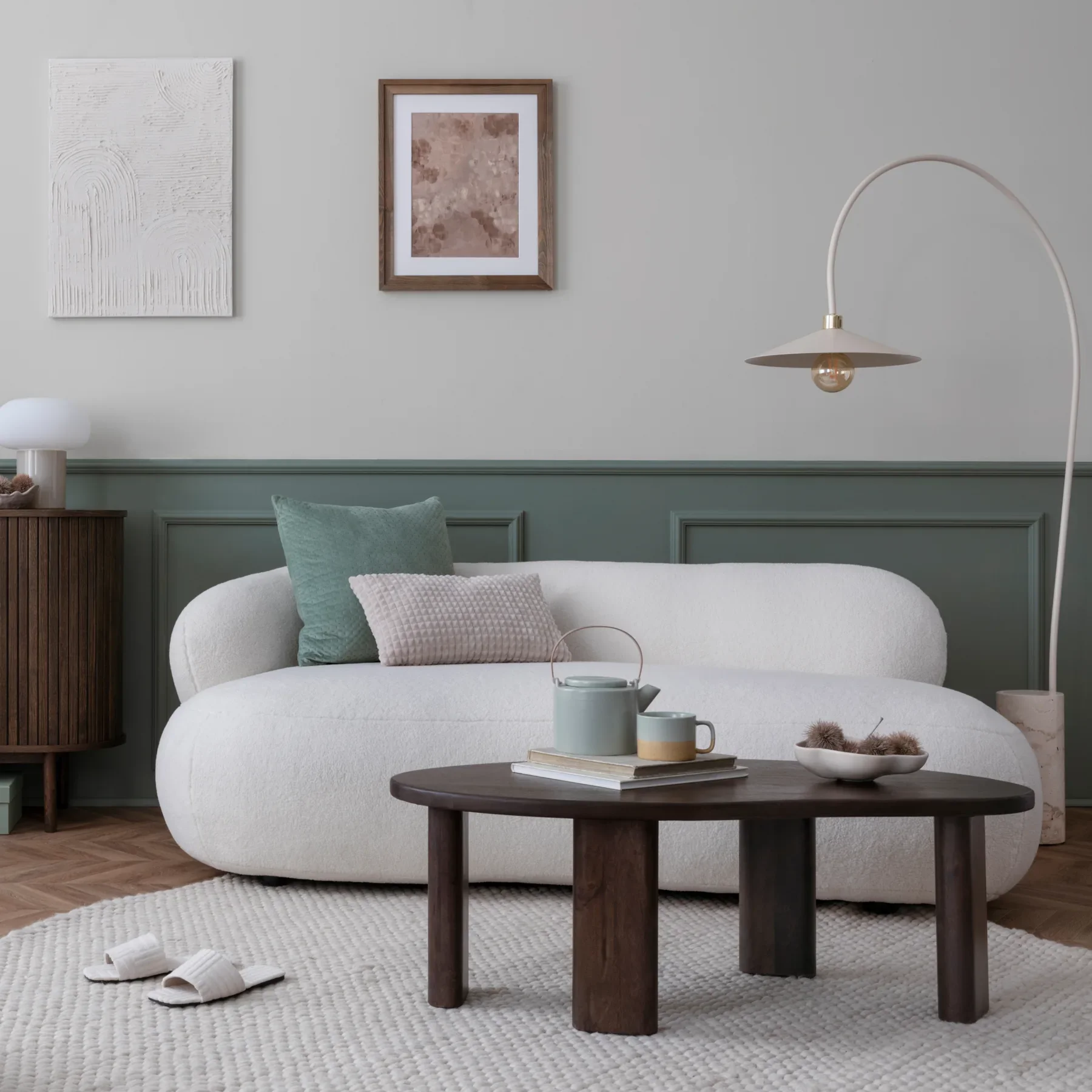
Place the proposed fitting on a room drawing at its actual dimensions, then check the view from the doorway, the seated position and the route through the room. For a decorative object or fitting, its relationship to furniture matters as much as how it looks in isolation. The still-life photograph illustrates an exercise in form and proportion, not a tested lighting product.
Where the supplier makes a sample or demonstration available, review the intended combination before committing to a full order. From the reading chair, can you see an uncomfortable bright source? On the working surface, does your own position interrupt the light? Do reflective finishes create a distracting view? Write down the observation rather than solving every problem by adding another fitting.

Build a fixture and control schedule you can use
Create one record for each proposed source. Give it a location, purpose, model reference, finish and responsible person. Add the bulb or integrated-source specification, intended control and the compatibility information still to be confirmed. Mark each entry as under consideration, awaiting information, approved or ordered.
For example: “Reading chair; local reading light; model not yet selected; check the view from the seated position; supplier to confirm the source and control combination.” That is an unresolved decision with an owner, rather than a decorative choice that has quietly become an instruction to buy.
Use Archmora’s project-brief tool, linked alongside this guide, to organize the first conversation. Keep the detailed specification with the people designing and installing the work. If the room arrangement itself remains uncertain, settle that question before treating a fixture schedule as final.
Revisit the room after dark
Return to the three situations in the opening brief. Review each one with the intended lighting arrangement rather than judging everything with every source switched on. Ask whether the room supports the activity and whether the controls are understandable to the people who use it.
Record what still needs adjustment and who will confirm the next step. Preserve the approved model references and settings so that maintenance can follow the same intention. These observations help refine a conversation; they are not a substitute for professional verification of the installation.
How this guide was prepared
Prepared by Archmora Editors with AI assistance and reviewed against the primary sources below. The room sketches, situations and schedule entries described here are original illustrative exercises, not first-hand project reports or claims of professional installation testing. Photography is illustrative stock imagery, not commissioned Archmora work. No product has been ranked, tested or presented through an affiliate link.
Questions worth asking.
0 of 7 considerations reviewed.
Further reading & sources
Archmora’s editorial questions are supported by the following references. Photography illustrates the ideas discussed.
FTC: Shopping for light bulbs ↗ENERGY STAR: Color appearance and dimmer buying guidance ↗Our editorial approach